STEP 1 • PREP
Cut evenly, dry
Cut each vegetable to similar size, dry washed pieces.
 GoAirFry
← Roast potatoes • Fries time & temp → • Best air fryer USA 2026 →
| Question | Answer |
|---|---|
| Best air fryer temp | 400°F / 200°C |
| Internal temp / doneness check | — — check with a thermometer, not colour alone, where a safe temperature applies |
| Single layer or crowded? | Single layer, always — crowding steams food instead of crisping it |
Four steps, in order — no photo is shown here, so follow the step text and the numbered method below.
Cut each vegetable to similar size, dry washed pieces.
Toss in oil and seasoning in a bowl, not just on top.
375–400°F, 8–15 minutes, hard veg first, soft veg later.
Finish with lemon or parmesan after cooking, serve at once.
Cook hard vegetables longer than soft ones. If mixing, start hard veg first.
| Item | Temp | Time | Notes |
|---|---|---|---|
| Broccoli florets | 400°F / 200°C | 8–10 min | Shake halfway, watch tips |
| Cauliflower florets | 400°F / 200°C | 12–15 min | Flip halfway |
| Zucchini half-moons | 375°F / 190°C | 8–10 min | Do not crowd — it steams |
| Carrots, sliced | 400°F / 200°C | 12–15 min | Cut thin, flip halfway |
| Green beans | 400°F / 200°C | 8–10 min | Toss in oil, shake halfway |
| Brussels sprouts, halved | 375°F / 190°C | 12–15 min | Cut side down first |
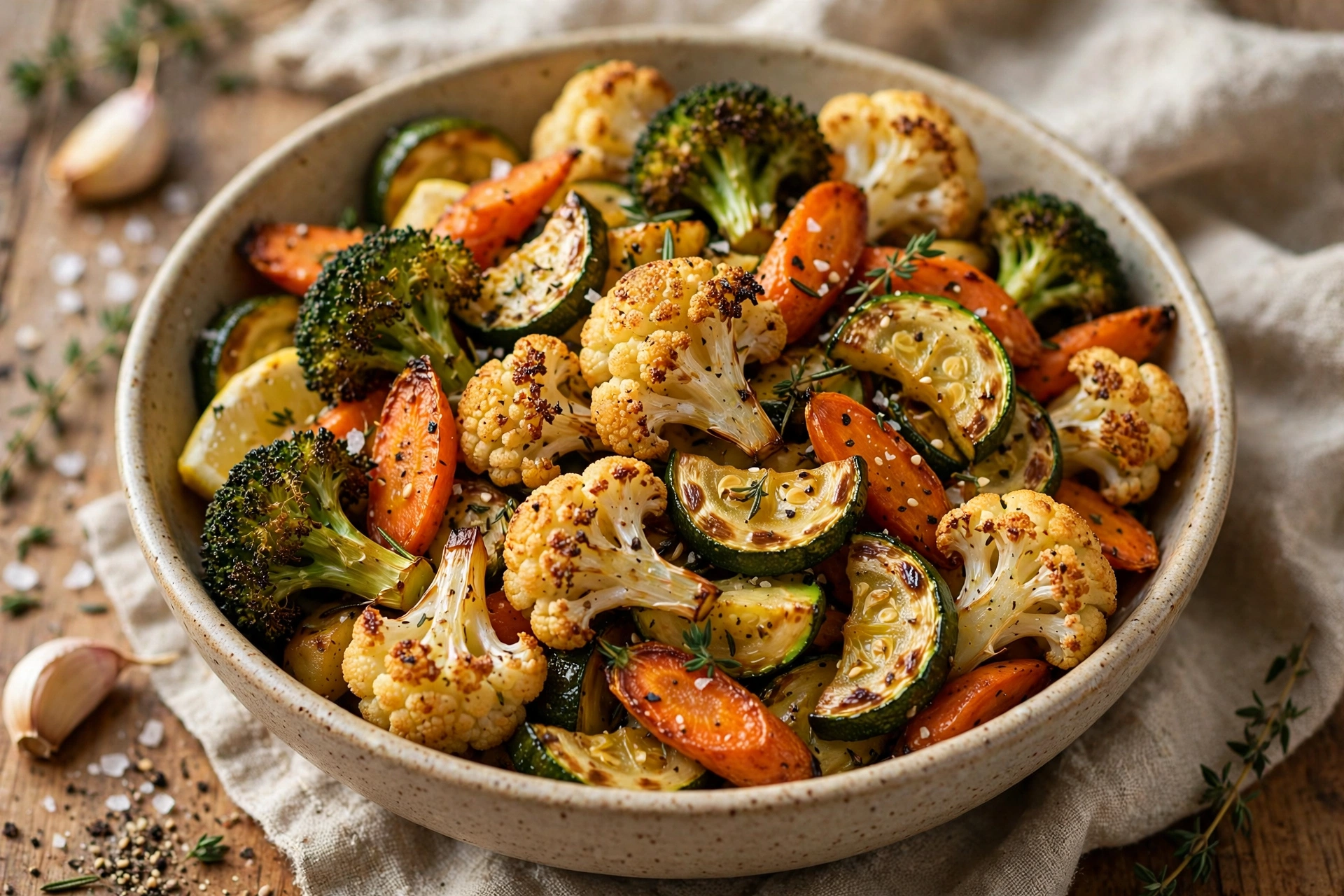
Vegetables suit the air fryer because hot circulating air browns edges quickly while the inside stays tender — the same effect as roasting, in less time and without heating a full oven. The catch is that vegetables differ hugely in water content and density, so grouping by type and timing, rather than cooking everything together, is what prevents soggy zucchini and raw carrots in the same basket.
Broccoli and cauliflower are the most forgiving air fryer vegetables — they brown well and hold shape. Zucchini is the least forgiving, because it is mostly water and steams if crowded. Carrots need thin, even slices or they stay hard. Frozen vegetables work but need drying and a few extra minutes; fresh vegetables give better texture. Season after cooking for delicate herbs, before cooking for garlic powder and paprika.
You need an air fryer, a knife, a bowl, and tongs. A 5–6 qt basket fits about 4 cups in a single layer. A dual basket helps when vegetables and a main must finish together. See the best air fryer guide linked below for size help.
Mixed vegetables are difficult because different vegetables do not cook at the same rate, and an air fryer treats them all with the same blast of hot air. Hard, dense vegetables such as carrots and cauliflower need time for heat to reach the centre, while soft, watery ones such as zucchini and mushrooms cook quickly and then collapse if left in too long. Leafy tips, like broccoli florets, brown and crisp fast, but the thick stems behind them can stay raw. Put them all in together, cut to random sizes, and you get the classic mixed-vegetable failure: some pieces burnt, some pieces raw, and some turned to mush in the same basket.
Water content is the second problem, and it is easy to miss. Vegetables release a lot of moisture as they cook, and if they are crowded or still wet from washing, that moisture turns to steam and stops browning altogether. Zucchini and mushrooms are the worst offenders, because they look dry going in and then release water halfway through. Too much oil does not fix this — it just makes soft vegetables greasy — and too little oil leaves dense vegetables dry and leathery on the outside while still hard inside. Seasoning also behaves differently across a mix: fine salt disappears into soft vegetables, while large, hard pieces can taste under-seasoned even when they share the same toss.
The fix is to group vegetables by density and size, not by recipe habit. Cook hard vegetables first, or give them a head start, and add softer ones later so everything finishes together. Cut dense vegetables thinner than soft ones — thin carrot slices beside chunky zucchini pieces will finish at roughly the same time, while thick carrots beside thin zucchini will not. Dry washed vegetables thoroughly, toss in just enough oil to coat lightly, and cook in a single layer at 375–400°F (190–200°C), shaking or flipping halfway so all sides brown. For a mixed batch, start carrots, cauliflower, and Brussels sprouts first, then add broccoli, green beans, and zucchini partway through, checking tenderness by piercing the thickest piece rather than judging by colour alone.
If a batch still comes out uneven, check grouping before you change temperature. A mix that was soggy was usually crowded or wet, not underheated, so cook in two batches next time and dry the vegetables better. A mix where broccoli burnt while carrots stayed hard was grouped wrong, not cooked wrong — give carrots a longer head start and pull broccoli earlier. Finish with lemon juice, herbs, or parmesan only after cooking, so wet toppings do not steam the vegetables at the last minute, and serve straight away, because air fryer vegetables soften quickly once they sit in a covered bowl.
Serve vegetables with crispy air fryer chicken, air fryer salmon, or air fryer chicken breast. They are also a side on the 7-day air fryer menu. For a fryer that fits veg and a main together, see best air fryer USA 2026.
Store cooked vegetables in the fridge for up to 3 days. Reheat at 375°F / 190°C for 3–4 minutes until hot — the microwave softens crisp edges. Cooked vegetables freeze poorly for texture, so cook fresh when you can.
Soggy vegetables usually mean crowding, too much oil, or mixing soft and hard veg together. Burnt tips mean small pieces cooked too long — cut evenly and check early. Bland vegetables mean seasoning only on top — toss in oil and seasoning in a bowl first. Dry vegetables mean too little oil or too high a temperature for delicate veg.
Most take 8–15 minutes at 375–400°F / 190–200°C, depending on type. Broccoli takes 8–10 minutes, cauliflower and carrots 12–15 minutes.
400°F / 200°C for most vegetables. Softer vegetables like zucchini do better at 375°F / 190°C.
Yes, shake or flip once halfway so all sides brown evenly.
Usually crowding, too much oil, or mixing soft and hard vegetables together. Cook in a single layer, by type.
Yes, if they need similar times, or start hard vegetables first and add soft ones later. Otherwise cook in batches.
Dry florets, toss lightly in oil, cook at 400°F / 200°C for 8–10 minutes, and watch the tips — they brown fast.
Yes, with drying and a few extra minutes. Fresh vegetables give better texture, but frozen works for weeknights.
A light oil toss helps browning and seasoning stick. Too much oil makes vegetables greasy, too little makes them dry.
At 375°F / 190°C for 3–4 minutes until hot. Avoid the microwave, which softens crisp edges.
Broccoli, cauliflower, carrots, green beans and Brussels sprouts are the most reliable. Zucchini works but needs space.
Yes, they need very little oil and keep most of their nutrients in a short cook. The seasoning and sauces matter more than the method.
Group by density and size. Start hard vegetables such as carrots and cauliflower first, then add softer ones such as broccoli, green beans, and zucchini partway through, so everything finishes together instead of some pieces burning while others stay raw.
Usually wet vegetables or a crowded basket. Dry washed vegetables thoroughly, use only a light coat of oil, and cook in a single layer so steam can escape. Zucchini and mushrooms release water as they cook, so give them space.
Yes. Cut carrots and other dense vegetables thinner than soft vegetables such as zucchini, so they finish at roughly the same time. Thick carrots beside thin zucchini will never cook evenly, whatever temperature you use.
As an Amazon Associate, GoAirFry earns from qualifying purchases through links on this page, at no extra cost to you. Always check the retailer's site for the final price. Times and temperatures here are starting points — check with a thermometer and check food early the first time you cook it in your model.