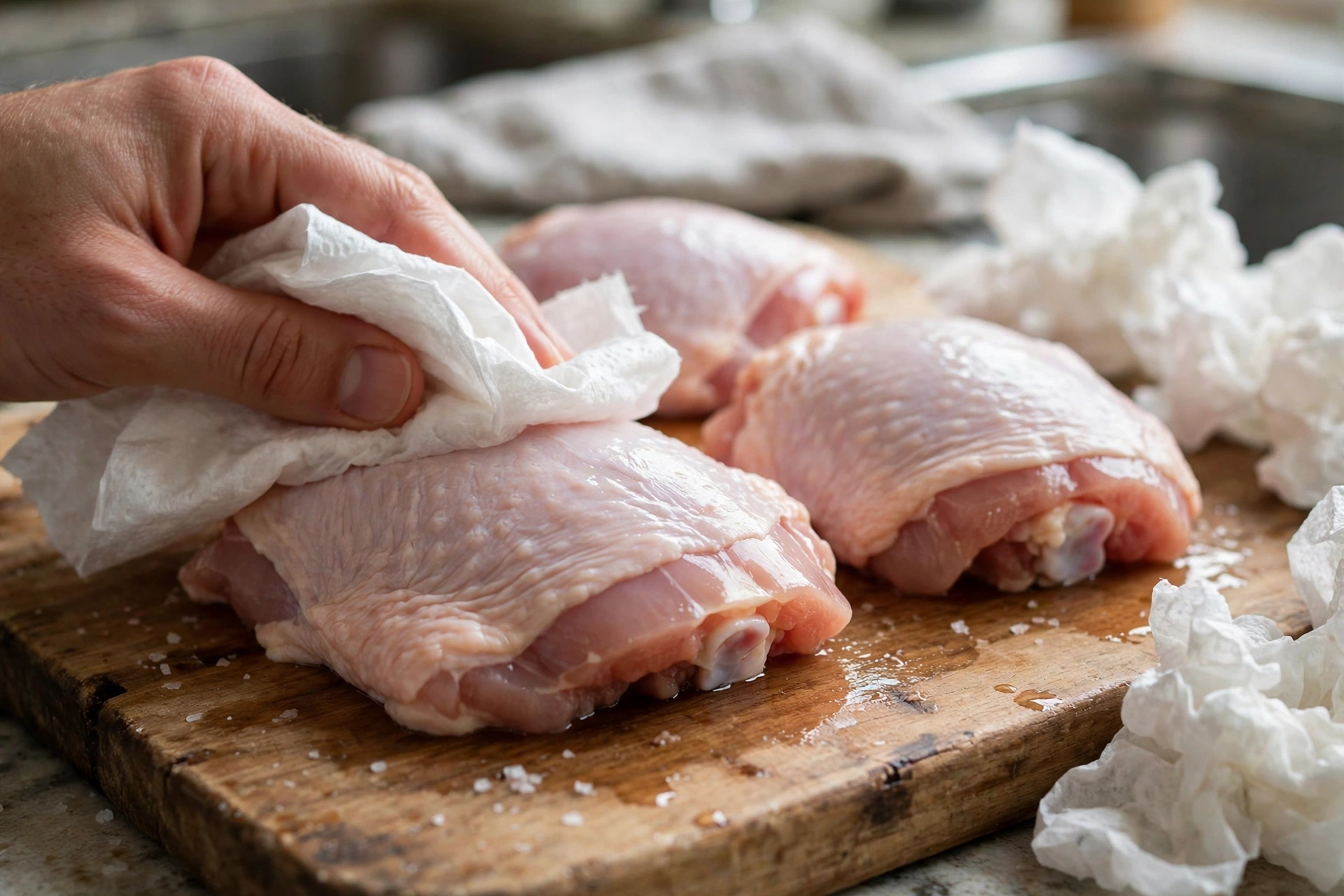
STEP 1 • PREP
Pat it dry
Dry every piece with paper towels. This is the difference between crispy and steamy.
 GoAirFry
Shopping from the UK? See the UK version → • All food times & temps →
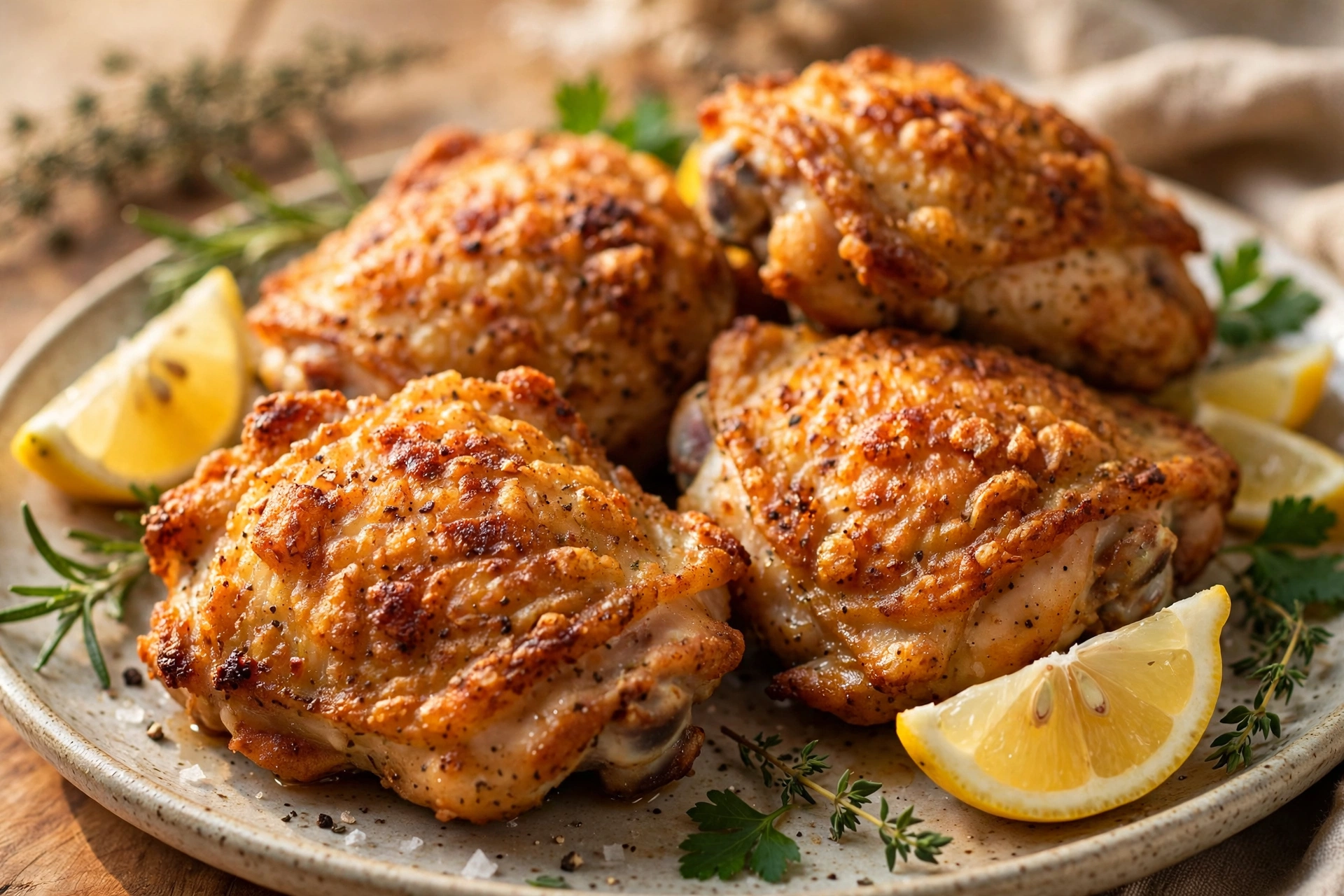
Each step is a different moment — no repeated hero photo, no machine photo.
Dry every piece with paper towels. This is the difference between crispy and steamy.
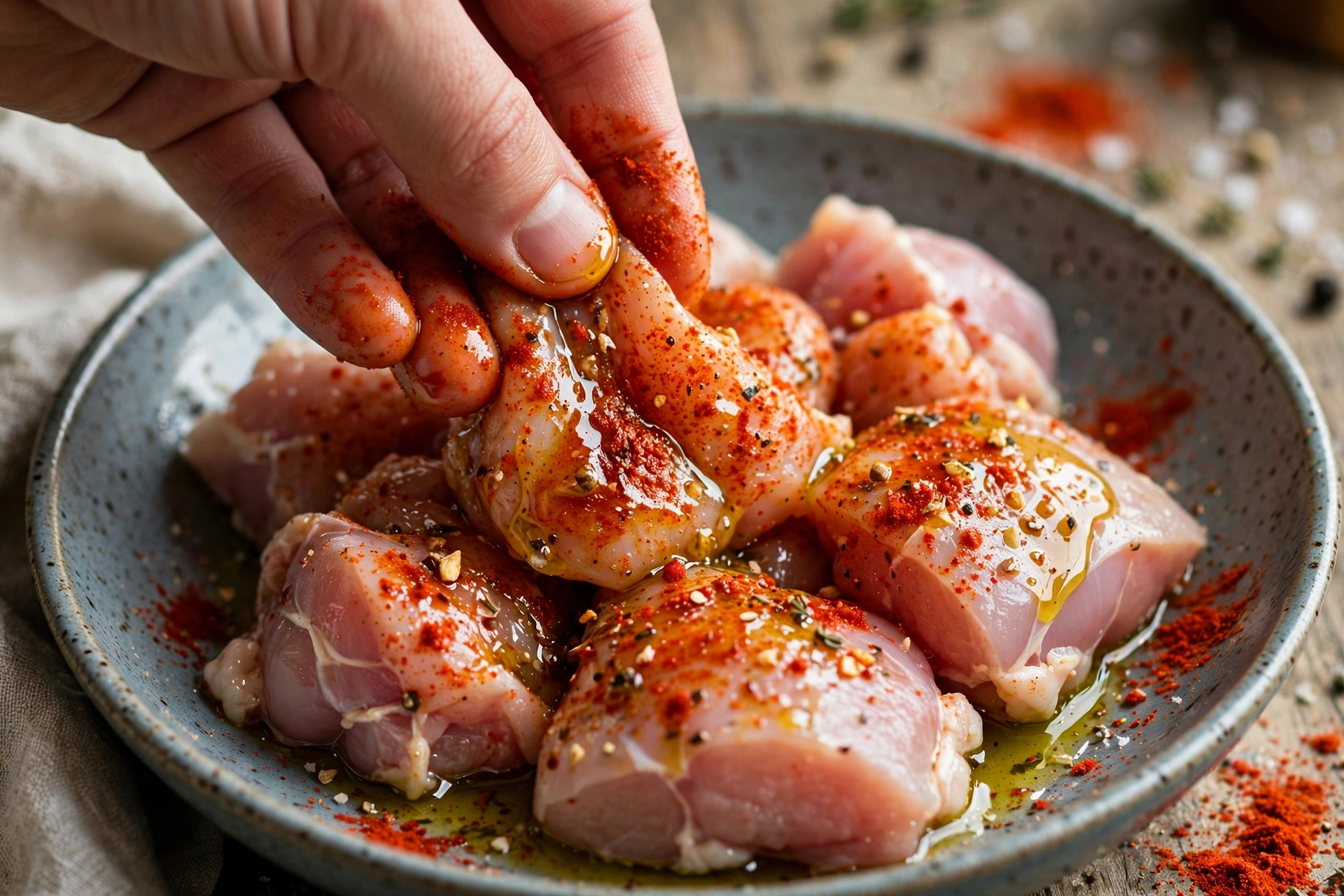
Rub with oil first so paprika, garlic and onion powder stick on all sides.
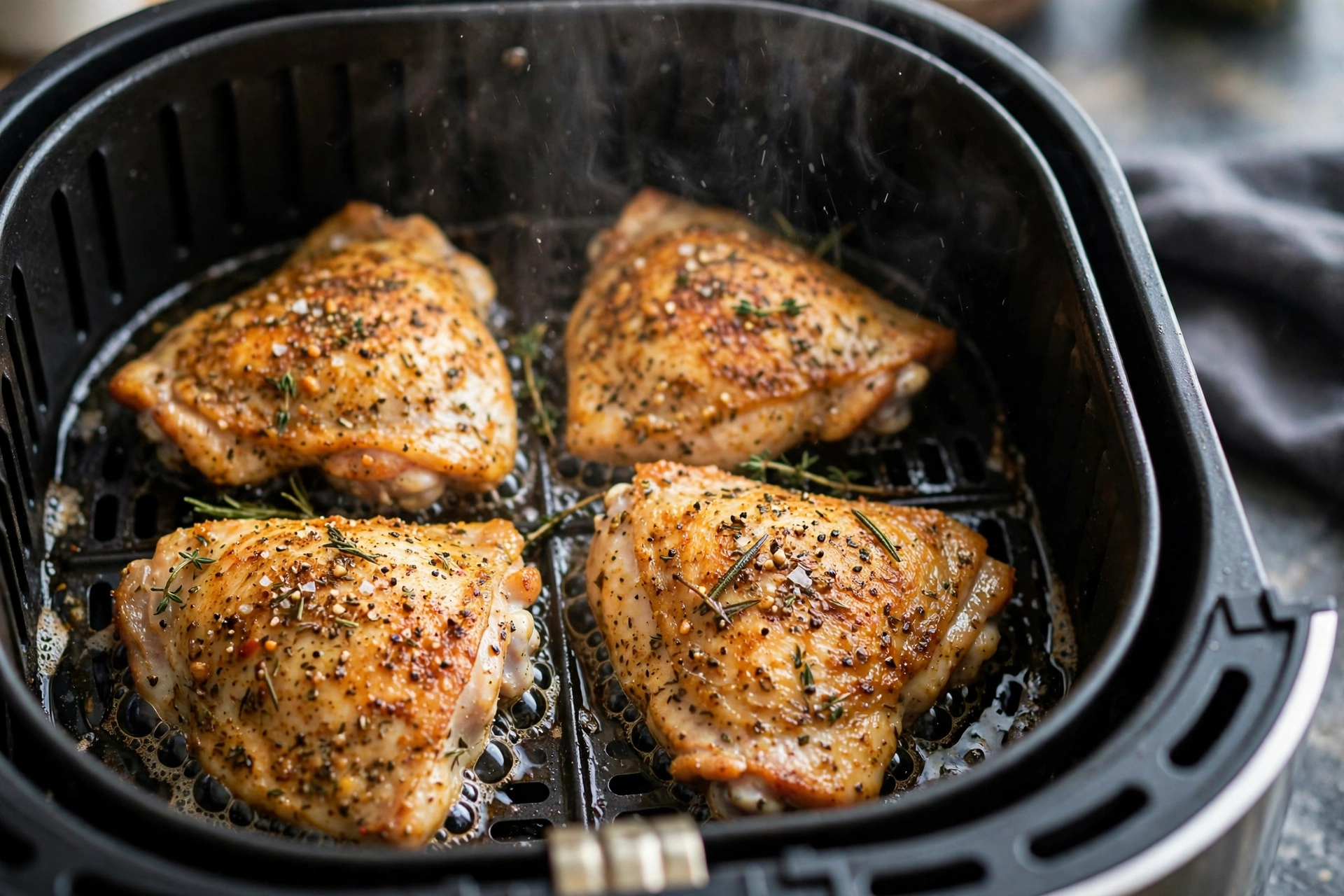
400°F / 200°C, skin-side up, flip once. Do not crowd the basket.
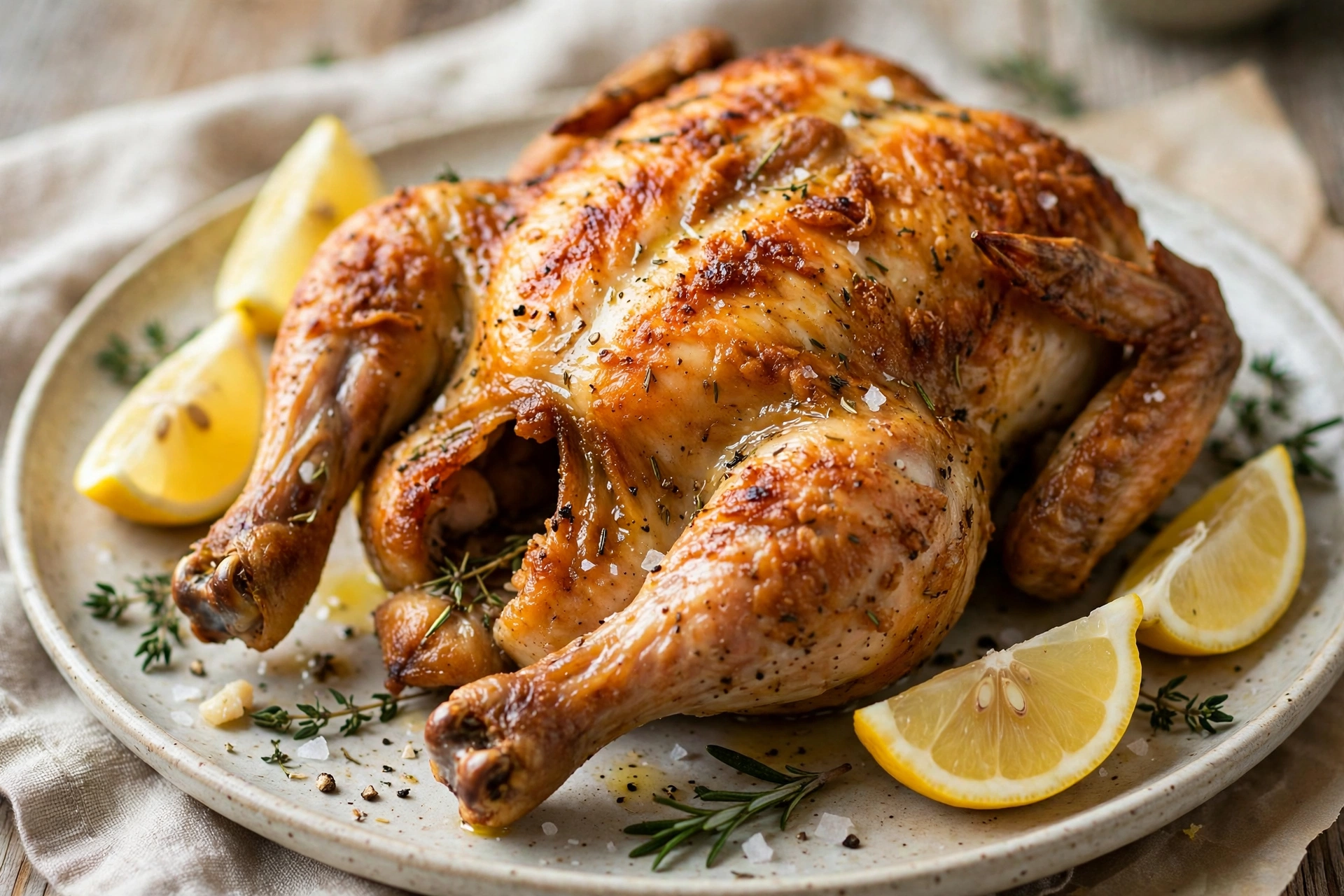
Check 165°F / 74°C in the thickest part, then rest before slicing.
Most air fryer chicken fails for the same three reasons: wet skin, a crowded basket, and no thermometer. Fix those three and this recipe is hard to ruin. It works for weeknight dinner, meal prep, salads, wraps, and sandwiches, and it needs no breading, no deep frying, and no special sauce.
| Question | Answer |
|---|---|
| Best air fryer temp | See the recipe meta card above - US temp first, Celsius in brackets |
| Internal temp / doneness check | Check with a thermometer, not colour alone - see the time/temp table below |
| Single layer or crowded? | Single layer, always - crowding steams food instead of crisping it |
Always cook to temperature, not just to time — thickness changes everything. 165°F / 74°C is safe for all chicken.
| Cut | Temp | Time | Notes |
|---|---|---|---|
| Boneless breast (about ¾ inch) | 400°F / 200°C | 18–22 min | Pound thick ends flat for even cooking |
| Boneless thighs | 400°F / 200°C | 18–22 min | More forgiving, harder to dry out |
| Bone-in thighs / drumsticks | 390°F / 199°C | 22–28 min | Skin gets very crispy — check at 22 min |
| Wings | 400°F / 200°C | 20–25 min | Flip twice, add sauce only at the end |
| Tenders / strips | 390°F / 199°C | 10–14 min | Thin, so they go fast — do not walk away |
Store in the fridge for up to 3 days. Reheat in the air fryer at 350°F / 175°C for 3–4 minutes — it comes back crispy, unlike the microwave. Freeze cooked, sliced chicken for up to 2 months and use it straight from frozen in pasta, rice bowls and wraps after reheating to 165°F / 74°C.
Crispy air fryer fries (cook them first, keep warm, then cook the chicken), a simple salad, rice, roasted vegetables, or coleslaw. If you cook for a family, a dual basket air fryer lets you cook chicken in one basket and fries in the other and finish them together.
Three things make air fryer chicken crispy instead of steamy. First, dry skin: water on the surface has to boil off before browning can start, so a wet piece spends half its cook time steaming and never gets crisp. Patting it dry removes that barrier. Second, hot, moving air: an air fryer is a small, powerful convection oven, so heat reaches every surface quickly and carries moisture away, which is why a single layer matters so much more here than in a big oven. Third, temperature, not time: chicken is done when the thickest part reaches 165°F / 74°C, and every minute past that dries it out.
Chicken: Boneless, skinless breast is lean and quick, but it is the easiest cut to overcook, so pounding it to an even thickness is not optional. Boneless thighs are more forgiving because they carry more fat, and they stay juicy even if you overshoot by a couple of minutes. Skin-on, bone-in pieces take longer but give the best crunch.
Oil: Olive oil is fine, but any neutral oil with a high smoke point works, including avocado oil or a light spray oil. You need only enough to help the seasoning stick and the surface brown; a heavy coat makes the seasoning slide off and the basket greasy. If you are cooking skin-on thighs or wings, you can often skip the oil entirely, because the skin renders its own fat.
You need an air fryer, a meat thermometer, tongs, and paper towels — nothing else is essential. A 4–5 qt single basket comfortably cooks 2 lb of chicken for four people in one batch if the pieces are not crowded; if your basket is smaller, cook in two batches and keep the first batch warm in a low oven rather than cramming everything in. A dual basket air fryer is the easiest upgrade for families, because you can cook chicken in one basket and fries in the other and finish them together. For help choosing, see our best air fryer guide and the buying guide.
A boneless breast about ¾ inch thick takes about 18–22 minutes at 400°F / 200°C, flipped halfway. Thicker breasts take longer, so always check the thickest part with a thermometer rather than trusting the clock alone — pull it at 165°F / 74°C and rest it for 5 minutes.
165°F / 74°C in the thickest part is the safe target for all chicken, including breast, thighs, wings and drumsticks. Colour and clear juices are not reliable tests on their own.
Pound it to an even thickness, do not overcook it, and rest it for 5 minutes after cooking. Brining for 30 minutes in salty water also helps, and thighs are naturally more forgiving than breast if you regularly find breast dries out.
Yes, but it takes roughly 50% longer, the skin will not crisp as well, and you must check that the centre reaches 165°F / 74°C. Thawing in the fridge overnight gives a much better result, so frozen chicken is best kept as a backup plan rather than the default.
Yes, 3 minutes at cooking temperature. A cold basket gives a pale, soft start and makes skin stick, while a hot basket starts crisping straight away. Most of the difference between good and great air fryer chicken comes down to preheating and drying the surface.
Skin-on gives the crispiest result and protects the meat underneath, which is why it is the best choice for thighs, drumsticks and wings. Skinless breast is leaner and works well for salads and wraps, but it needs a light oil rub and closer watching so it does not dry out.
Rubbery chicken is usually undercooked, cooked from very cold, or sliced straight away without resting. Let it come closer to room temperature for 15 minutes, cook to 165°F / 74°C, rest for 5 minutes, and slice across the grain for the most tender bite.
Reheat at 350°F / 175°C for 3–4 minutes, just until warm through, and avoid reheating it twice. A light brush of oil or a splash of stock on sliced chicken helps, and the microwave will make it rubbery by comparison, so the air fryer is worth the extra couple of minutes.
In a dual basket air fryer, yes — chicken in one basket and fries in the other, timed to finish together. In a single basket, cook the fries first, keep them warm in a low oven, then cook the chicken, or the basket will be crowded and both will steam.
A 6 qt single basket or an 8 qt dual basket (2 x 4 qt) works best for a family of four. A 4 qt basket is fine for one or two people, but a family meal in a small basket means two batches, and the first batch will cool while the second cooks.
Cook a double batch, cool it quickly, and store it sliced or diced in airtight containers for up to 3 days, or freeze single portions for up to 2 months. Keep sauces separate, reheat in the air fryer at 350°F / 175°C, or eat it cold in salads and wraps.
Yes, in the sense that it uses far less oil than deep frying, so the same piece of chicken is usually lower in fat and calories. The chicken itself still matters — a breaded, sugary-glazed piece is not a health food just because it came from an air fryer, but plain seasoned chicken cooked this way is a genuinely lighter weeknight option.
Yes, as long as everything is in a single layer and the chicken still reaches 165°F / 74°C. Hardy vegetables like carrots and peppers work well; soft vegetables cook faster, so add them halfway through, and do not let raw chicken juices sit on ready-to-eat vegetables — cook them together, and serve them together.
Sticking usually means a cold basket, no oil, or moving the chicken too early. Preheat for 3 minutes, give the chicken a light oil rub, and leave it alone for the first few minutes so a crust can form — it releases much more easily once that crust sets.
As an Amazon Associate, GoAirFry earns from qualifying purchases through links on this page, at no extra cost to you. Always check the retailer's site for the final price.