 Go
Air Fryer Eggs Guide: Every Style, Times and Temperatures
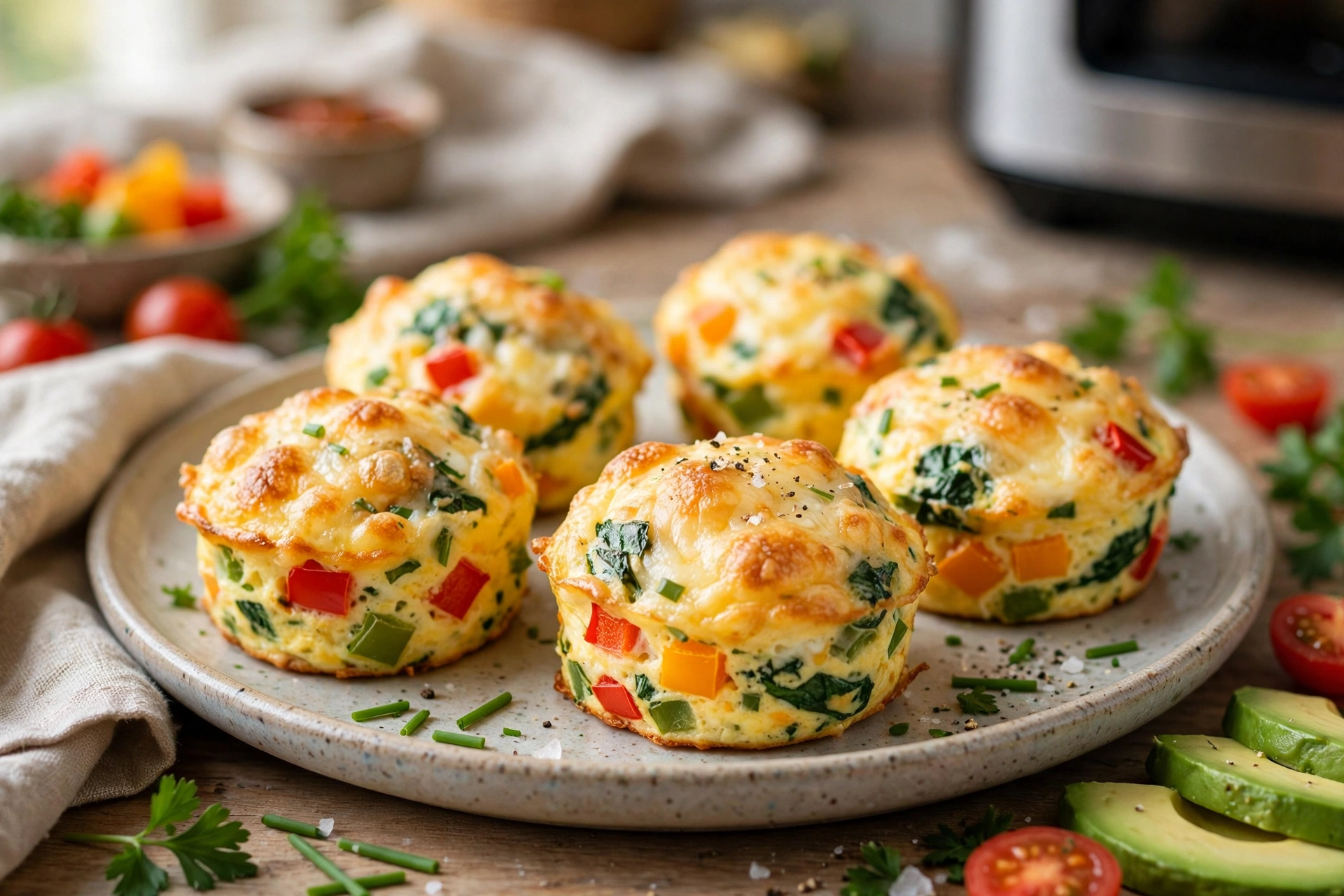
Eggs are one of the most useful things an air fryer can cook, because the same ingredient turns into four completely different breakfasts depending on the container and the temperature. Eggs in the shell become boiled eggs with no pot of water. Eggs cracked into a ramekin become baked eggs with a runny or set yolk. Eggs whisked with cheese and vegetables in a muffin mould become egg bites. Eggs whisked in a cake pan become a frittata-style bake that slices like a cake. The air fryer handles all four, and the differences come down to temperature, time, and vessel, not to special equipment.
This guide is about cooking technique only: temperatures, times, textures, and how to tell when each style is done. It does not make claims about diet or health, and it does not rank the styles against each other, because the right style depends on the morning you are having. A boiled egg is best for packing, a baked egg is best for toast, egg bites are best for batch cooking, and a frittata-style bake is best for feeding several people at once.
Master times and temperatures table
| Style | Temperature | Time | Done when |
|---|---|---|---|
| Boiled eggs, jammy yolk | 250°F (121°C) | 11 to 12 minutes | Yolk soft and jammy after 5 minutes in cold water |
| Boiled eggs, fully set yolk | 250°F (121°C) | 15 to 16 minutes | Yolk firm all the way through |
| Baked eggs, runny yolk | 320°F (160°C) | 10 to 12 minutes | White set, yolk still wobbles |
| Baked eggs, set yolk | 320°F (160°C) | 13 to 15 minutes | White set, yolk firm but not dry |
| Egg bites | 300°F (149°C) | 12 to 15 minutes | Tops set, centre does not wobble |
| Frittata-style egg bake | 320°F (160°C) | 18 to 22 minutes | Edges firm, centre wobbles only slightly |
All times in this guide assume fridge-cold, large eggs and a preheated air fryer. Small eggs need about 1 minute less, and very large eggs need about 1 minute more, so check the first batch a minute early and adjust the next batch, rather than trusting the table blindly. Air fryers also vary: a compact basket model runs hotter than a large oven-style model at the same setting, so the first time you cook a style, watch it closely near the end of the time.
Boiled eggs in the shell
Place eggs in a single layer in the basket, without stacking, and cook at 250°F (121°C). The low temperature matters: at higher temperatures the shells crack more often and the whites go rubbery near the shell. Cook for 11 to 12 minutes for a jammy yolk, 13 to 14 minutes for a soft but not runny yolk, and 15 to 16 minutes for a fully set yolk. Transfer the eggs straight into cold water for 5 minutes, which stops the cooking and makes peeling easier.
Peeling is where boiled eggs usually go wrong, and the fix is cooling plus technique, not a trick ingredient. Crack the shell all over on a hard surface, start peeling at the wide end where the air pocket sits, and peel under running cold water so the water gets under the membrane. Older eggs peel more easily than very fresh eggs, so if you plan boiled eggs for the week, buy the eggs a few days ahead and keep them in the fridge until cooking day.
Baked eggs
Baked eggs are eggs cracked into a greased ramekin or small oven-safe dish, sometimes with a spoonful of cream, grated cheese, spinach, or diced tomatoes already in the dish. Cook at 320°F (160°C) for 10 to 12 minutes for a runny yolk, or 13 to 15 minutes for a set yolk. The white should be fully set and opaque, with no clear, jelly-like patches, while the yolk keeps the texture you chose.
The most common mistake with baked eggs is a temperature that is too high. Above 350°F (177°C), the edges of the white turn rubbery before the centre sets, and the yolk overcooks while the white is still catching up. The second mistake is cooking by time alone: ramekins vary in size and thickness, so a thick ceramic ramekin needs the longer end of the range, while a thin metal dish needs the shorter end. Check at the short end of the time, and add 2 minutes at a time if the white is not yet set.
Egg bites
Egg bites are whisked eggs mixed with cheese and diced fillings, poured into a greased silicone or metal muffin mould, and cooked at 300°F (149°C) for 12 to 15 minutes. Good fillings include diced peppers, spinach, mushrooms, sweetcorn, and grated cheese, all diced small so they distribute evenly and cook through in the short time. Fill each cup about three-quarters full, because the eggs puff up as they cook and spill over if the cups are too full.
Egg bites are done when the tops are set and golden in places, and the centre no longer wobbles when you shake the mould gently. Let them cool in the mould for 5 minutes before turning them out, because they firm up as they cool and break apart if lifted while still soft. Once cool, egg bites keep for 3 to 4 days in the fridge in an airtight container, and they reheat at 325°F (163°C) for 3 to 4 minutes from the fridge, which makes them a natural batch-cooking dish.
Frittata-style egg bake
A frittata-style bake uses the same whisked-egg mixture as egg bites, poured into a single greased cake pan or oven-safe dish about 15 to 18 centimetres across, and cooked at 320°F (160°C) for 18 to 22 minutes. Fillings work the same way, but larger pieces are fine here, because the longer cooking time gives them time to soften. Cooked diced potatoes, mushrooms, peppers, and spinach all work well, and cheese stirred through the mixture melts into the bake rather than sitting on top.
The bake is done when the edges are firm and golden and the centre wobbles only slightly, like set jelly, when you shake the pan. If the centre still ripples like liquid, cook for 3 more minutes at 320°F (160°C) and check again. Let the bake stand for 5 minutes before slicing, because slicing too early breaks the slices apart, while a short rest lets the eggs finish setting and hold their shape. Serve warm from the pan, or cool and slice for packing.
Troubleshooting air fryer eggs
Cracked shells usually mean the temperature was too high or the eggs were stacked, so cook at 250°F (121°C) in a single layer and discard any egg that is already cracked before cooking. Rubbery whites usually mean baked eggs cooked above 350°F (177°C), so drop to 320°F (160°C) and check early. A wobbly frittata centre usually means the pan was too deep or too wide for the basket, so use a shallower pan and add time in 3-minute steps rather than raising the temperature.
Uneven cooking usually means the basket was crowded or the pan touched the basket walls, blocking airflow. Cook in a single layer with space around each item, and use a pan smaller than the basket so hot air can circulate. Green rings around boiled yolks mean the eggs cooked too long or cooled too slowly, so shorten the time by 1 minute and cool in cold water straight away. Sticking usually means the mould or ramekin was not greased, so grease every surface the egg touches, including the sides, before pouring in the mixture.
Frequently asked questions
What temperature should I cook air fryer boiled eggs at for a jammy yolk?
Cook air fryer boiled eggs at 250°F (121°C) for 11 to 12 minutes for a jammy yolk, then cool them in cold water for 5 minutes. For a fully set yolk, cook at 250°F (121°C) for 15 to 16 minutes instead, keeping the same temperature and changing only the time.
How do I peel air fryer boiled eggs without tearing the white?
Cool the eggs in cold water for at least 5 minutes, then crack the shell all over on a hard surface and peel under running cold water, starting at the wide end where the air pocket sits. Older eggs peel more easily than very fresh eggs, because the membrane loosens as eggs age.
Why did my air fryer baked eggs go rubbery, and what temperature fixes it?
Baked eggs go rubbery when the air fryer runs too hot, usually above 350°F (177°C), or when they cook for too long. Bake them at 320°F (160°C) for 10 to 12 minutes instead, and take them out while the white is just set and the yolk still wobbles slightly, because they keep cooking for a minute after they leave the basket.
How long do air fryer egg bites take at 300°F (149°C) in a silicone mould?
Air fryer egg bites take 12 to 15 minutes at 300°F (149°C) in a silicone mould, depending on how full the mould is and how many fillings you add. They are done when the tops are set and the centre no longer wobbles when you shake the mould gently.
What is the difference between air fryer egg bites and a frittata-style egg bake?
Egg bites are small, individual portions baked in a muffin mould, so they cook fast and are easy to pack for later. A frittata-style egg bake is one large dish, cooked in a single cake pan or oven-safe dish, sliced after cooking, and better for serving several people at once from one bake.
How do I know when a frittata-style air fryer egg bake is set in the middle?
Shake the pan gently: the edges should be firm and the centre should wobble only slightly, like set jelly, not ripple like liquid. If the centre still ripples, cook for 3 more minutes at 320°F (160°C) and check again, because a liquid centre will not set properly once the bake cools.
Can I cook air fryer eggs straight from the fridge, or should they reach room temperature first?
You can cook air fryer eggs straight from the fridge, and the times in this guide assume fridge-cold eggs. Room-temperature eggs cook about 1 minute faster, so if your eggs have been sitting out, check them a minute early rather than changing the temperature.
Why do air fryer eggs crack in the shell, and how do I stop it happening?
Eggs crack when hot air expands the air pocket inside the shell too fast, or when an egg already has a hairline crack. Reduce cracking by cooking at 250°F (121°C) rather than higher temperatures, placing eggs in a single layer without stacking, and discarding any egg that is already cracked before cooking.
How do I scale air fryer egg bites from two servings to a full tray without changing the time?
Fill more mould cups with the same amount of mixture per cup, rather than overfilling a few cups, and cook in two batches if your basket cannot hold the full tray in a single layer. The time stays at 12 to 15 minutes at 300°F (149°C) per batch, because each bite cooks the same way regardless of how many batches you make.
What pan or mould size works best for a frittata-style air fryer egg bake?
A round cake pan or oven-safe dish about 15 to 18 centimetres across, which fits inside most standard baskets with room for air to circulate, works best. A pan that touches the basket walls blocks airflow and cooks unevenly, so measure your basket before choosing a pan, and use a smaller pan rather than forcing a large one in.
As an Amazon Associate, GoAirFry may earn from qualifying purchases made through retailer links on this page, at no extra cost to you. Always check the retailer's site for the final price.