STEP 1 • PREP
Grease and fill
Spray the molds, add peppers, spinach and cheese, then pour over whisked eggs.
 GoAirFry
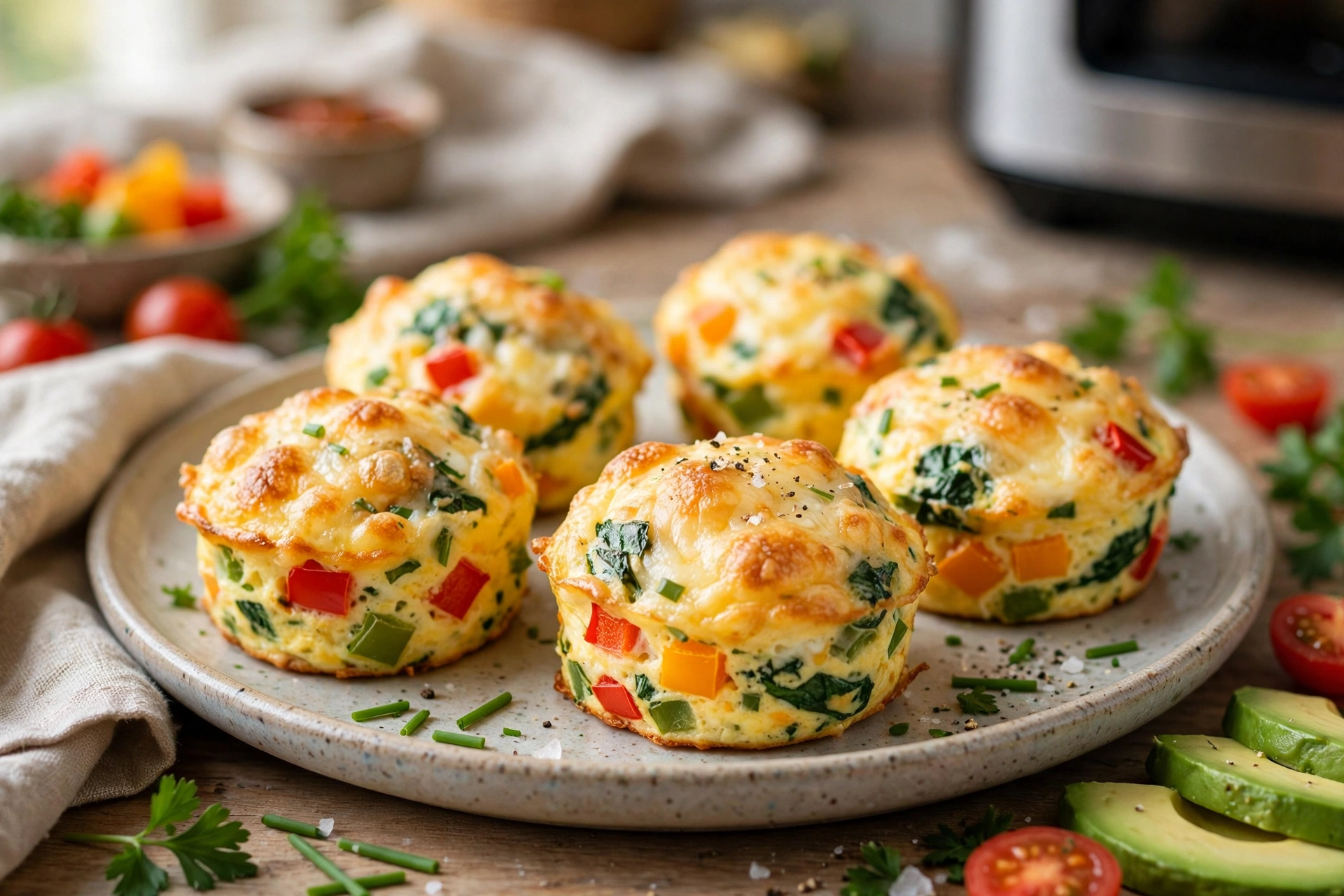
Egg bites look simple, and they are — but only at the right temperature. The fix is a gentler heat and a little patience. At 300°F (150°C), eggs set slowly and evenly.
Silicone molds are the other half of the trick. They turn a loose egg mixture into neat, portable bites that hold their shape, reheat well, and pack easily for busy mornings. This recipe makes 12 bites.
Once you know the temperature and the fill level, you can swap the vegetables and cheese to suit what is in the fridge, and the method stays exactly the same.
Spray the molds, add peppers, spinach and cheese, then pour over whisked eggs.
Leave room to rise — full molds spill over.
300°F (150°C), 12–15 minutes, until set.
Five minutes in the molds, then pop out cleanly.
| Question | Answer |
|---|---|
| Best air fryer temp | 300°F (150°C) — gentle heat sets eggs evenly |
| Cook time | 12–15 minutes, checking from 12 minutes |
| Fill level | Three-quarters full, so bites can rise without spilling |
| When are they done? | Tops set, spring back lightly, no liquid egg in the centre |
Temperature is the whole recipe here.
| Setup | Temp | Time | Notes |
|---|---|---|---|
| Silicone mold, standard bites | 300°F (150°C) | 12–15 min | Check from 12 min; centre must be set |
| Metal ramekins or muffin tin | 300°F (150°C) | 10–13 min | Metal heats faster, so check earlier |
| Individual silicone cups | 300°F (150°C) | 12–15 min | Single layer only, with gaps between cups |
| Reheating from the fridge | 300°F (150°C) | 3–4 min | Warm through only; do not reheat twice |
Air fryers are built for crisping, which means a powerful heating element very close to the food. That is wonderful for fries and terrible for eggs if you let it run unchecked. At high heat, the surface of an egg bite sets and browns within minutes while the centre is still liquid.
The way out is to cook lower and longer than feels natural. At 300°F (150°C), heat reaches the centre gradually, so the bite sets evenly and the top colours gently.
Two other faults spoil otherwise good batches. The first is wet filling: mushrooms, courgette and uncooked spinach release water as they cook, and that water has nowhere to go inside a closed mold, so the bites turn soggy. Cook hard vegetables first and squeeze cooked spinach dry. The second is overfilling: egg rises, and a full mold spills over the rim and bakes into a messy collar that tears when you turn the bite out.
Cool egg bites completely before storing, or trapped steam will make them damp. Keep them in an airtight container in the fridge for up to 3 days. For longer storage, freeze them in a single layer on a tray until solid, then transfer to a freezer bag for up to 1 month; thaw overnight in the fridge before reheating. Reheat at 300°F (150°C) for 3–4 minutes from the fridge, or 5–6 minutes from thawed frozen, until warm through.
Egg bites are a complete small breakfast on their own, but they pair well with toast, fresh fruit, or a simple tomato salad. For a bigger weekend breakfast, serve them alongside air fryer breakfast burritos and let everyone pick their own combination.
Eggs set through gentle, even heat, and this recipe gives them exactly that. The low temperature of 300°F (150°C) lets the centre and the outside set together, the silicone mold holds a small, even portion so every bite cooks at the same rate, and the short rest firms the bites before they are released. Each choice removes one common failure, which is why the method stays reliable even when you change the filling.
You need an air fryer, a silicone egg bite mold or individual silicone cups, a jug for whisking and pouring, and oil spray. A standard 7-cup mold fits most 5 qt baskets and larger, but measure your basket first: the mold must sit flat with air space around it. Smaller baskets work fine with individual silicone cups arranged in a single layer. For help choosing, see our air fryer foods guide for times and temperatures across breakfast dishes.
300°F (150°C) is the sweet spot. Higher heat browns the tops before the centres set, leaving dry edges and a soft middle. At 300°F (150°C) the eggs set gently and evenly, so give them the full 12–15 minutes and check the centre of one bite before removing the batch.
Egg bites in silicone molds take 12–15 minutes at 300°F (150°C). Silicone heats more slowly than metal, so allow a little longer than eggs in a metal pan. Start checking at 12 minutes: the tops should look set and spring back lightly, with no liquid egg in the centre.
Egg bites puff as steam builds inside, then settle as they cool — a little sinking is normal. A dramatic collapse usually means the centre was undercooked or the heat was too high. Cook at 300°F (150°C) until the centre is fully set, then rest the bites in the molds for 5 minutes.
Yes, give silicone molds a light coat of oil spray even though silicone is naturally non-stick. Egg clings stubbornly, and a thin coat is the difference between bites that pop out cleanly and bites that tear. Spray lightly and fill straight away.
Fill each mold about three-quarters full. Egg bites rise as they cook, and a mold filled to the brim spills over and bakes onto the rim. If you are adding chunky vegetables, spoon them in first, then pour the egg over the top.
Yes, use small oven-safe ramekins or a metal muffin tin that fits your basket, greased well. Metal heats faster than silicone, so start checking about 2 minutes earlier, at around 10 minutes. Paper muffin cases are not a good substitute: they soften and stick.
Cheddar, Monterey Jack and mozzarella all melt smoothly into egg bites. Grate the cheese yourself rather than using pre-shredded cheese, which is coated to stop clumping and melts less evenly. Use a modest handful: too much cheese sinks and makes the base greasy.
Soft vegetables such as spinach, spring onions and diced peppers can go in raw, finely chopped. Harder vegetables such as mushrooms and courgette should be cooked first, because they release water and can make bites soggy. Keep total vegetables to about one cup per batch.
That combination almost always means the temperature was too high. The top browns quickly near the element while the centre lags behind, so by the time the middle sets, the outside is overcooked. Drop to 300°F (150°C) and use the lowest basket position.
Let the bites cool in the molds for 5 minutes, then push each one out gently from underneath rather than pulling from the top. Run a thin knife around the edge first if one feels stuck. A bite that tears hot will often release cleanly once it has set.
Yes, egg bites are made for making ahead. Cool completely, store in an airtight container in the fridge for up to 3 days, and reheat at 300°F (150°C) for 3–4 minutes until warm through. Reheat only what you need: repeated reheating dries them out.
A standard 7-cup silicone egg bite mold fits most 5 qt baskets and larger. Measure your basket before buying a mold: it needs to sit flat with a little air space around it so hot air can circulate. For smaller baskets, use individual silicone cups in a single layer.
Watery bites usually come from wet vegetables or too much milk. Cook mushrooms and courgette first, squeeze cooked spinach dry, and keep added milk to 2 tablespoons for 6 eggs. Also rest bites for 5 minutes after cooking: they firm up as they cool.
No, stacking molds blocks the hot air that does the cooking, so the lower mold steams while the upper browns. Cook molds one at a time in a single layer. If you need a double batch, cook the first mold, keep it warm, and cook the second.
As an Amazon Associate, GoAirFry may earn from qualifying purchases made through retailer links on this page, at no extra cost to you. Always check the retailer's site for the final price.